
For twenty years, Future Friendly has built new products and services with Australia’s largest organisations.
These organisations are rarely product-led. That is to say, their leadership is not comprised of people who have spent time leading recognised product organisations or spent time deeply embedded with product teams.
The leadership in the organisations we partner with are formed of people with extensive experience in their relevant industry or policy sector. They are always leading organisations that are on transformation journeys and building their digital product capability to deliver products and services successfully.
They have delivery teams typically operating under an enterprise agile framework (e.g. SAFe). This is useful to begin their transformation to becoming product organisations by helping to give production teams the ability to ship relatively regularly (though sometimes never at all!). These teams are rarely product-led. They focus on running an agile process to deliver on assigned tasks to ship mandated features. This normally plays out as, rather than many short iterative releases that are informed by customer feedback, they focus on large ‘big-bang’ releases that prioritise everything the business wants. This leads to a consistent rate of failure.
In these organisations, business leaders and their product teams are operating in the messy middle of waterfall and agile ways of working.
This creates a macro problem that we call The Strategy—Action Gap.
Business leaders are focused on defining vision and setting priorities and are bound by traditional business deadlines (financial years, quarterly planning, budget cycles). Delivery teams are focused on building products and working in an agile manner which means they are uncomfortable committing to traditional business deadlines and want to remain open to change. Traditional organisational hierarchies pull these two groups further apart and increase the tension between them.
This tension means that innovation, change work that creates entirely new types of value for customers, is impossible as a result of this disconnect. In addition, attracting and retaining top talent is impossible.
As a product design consultancy, we have always strived to create meaningful change quickly through the products we have launched. However, as consultants, we have had to instil confidence in the organisations we have partnered with through rigorous plans, clear roadmaps, and approved resources whilst empowering our product teams to solve problems autonomously. Over the last twenty years, that has led us to craft a way of working that instils confidence in business leaders by connecting them closely to their product teams to solve the problem of The Strategy—Action Gap.
Many of the organisations we work with see this problem for themselves and solve it by adding more middle managers, moving to new scaled agile frameworks, bringing on more agile coaches, adding more resources or, at worse, sticking with the ‘way we’ve always done it.’ Our experience has shown us, whether it be small start-ups or some of the largest organisations in the world, that the foundational skills required to close this gap and drive true innovation are simple.
The good news is that many of these skills are foundational, straightforward and common sense. Though, as we have found, they are often not commonplace. Through our Team Acceleration methodology, we can turn groups of individual contributors into strong product teams capable of transforming complex problems into solutions, questions into decisions, data into stories, and insights into direction.
There are four key abilities our Team Acceleration methodology embeds into teams:
By giving teams the ability to collaborate truly, we give people what they need to love the work they do: a greater sense of purpose, the autonomy to make better decisions, and the environment to do work that generates tangible value – to make things that matter to others. Often perceptions around collaboration and teaming are – that these ideas are wishy-washy, performative, and not tied to results. In these organisations, we see leadership focusing on command and control tactics. This is in an attempt to create confidence that the things we are making will deliver value. They are seeking order through the illusion of the org chart and the roles and responsibilities it alleges to make clear.
Many of the most successful product organisations in the world [Google, Netflix, Spotify] understand that teams that are connected to the strategy and empowered to solve problems will shift to focusing on outcomes rather than outputs. Instead of teams churning their way through tasks the business wants to be done, you now have empowered product teams designed to serve your customers in ways that work for your business.
That is a competitive advantage.
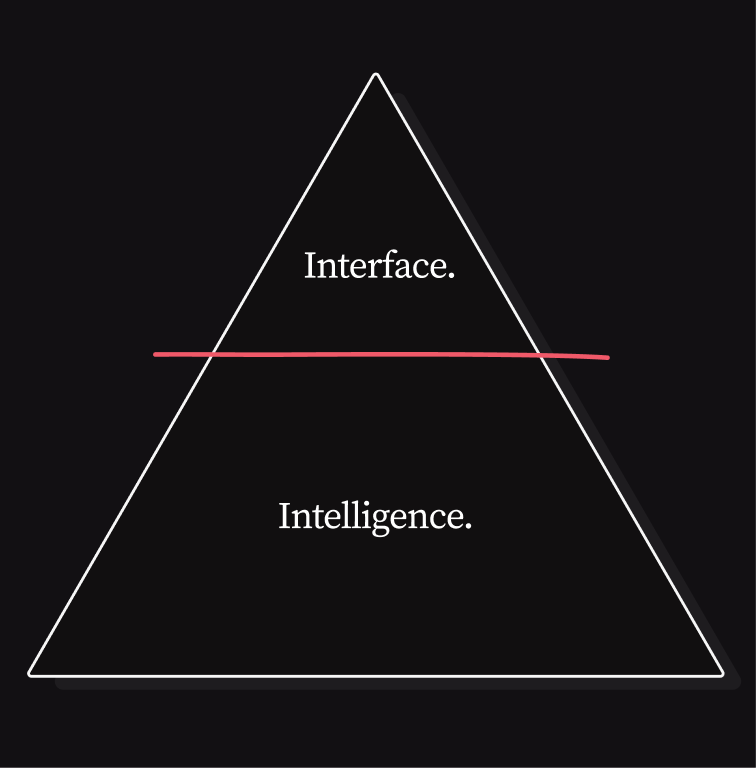
What's shifting in product design, what stays true, and where teams should focus next
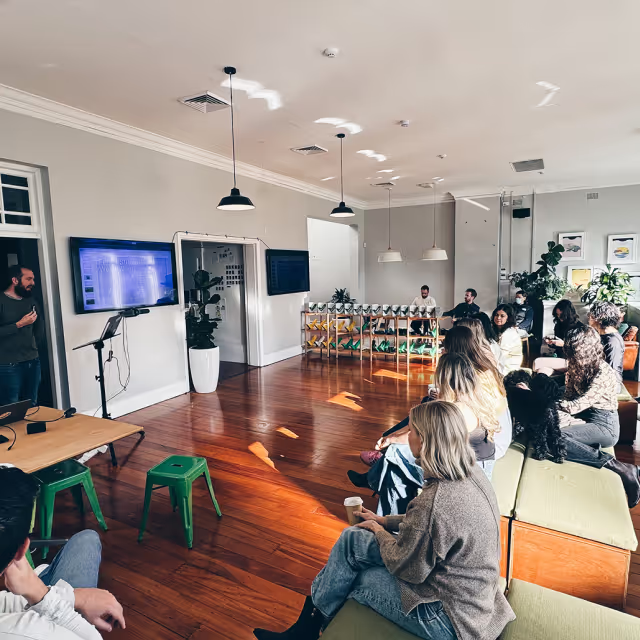
In consultation with EY, we made the strategic decision to transition Future Friendly back to an independent agency
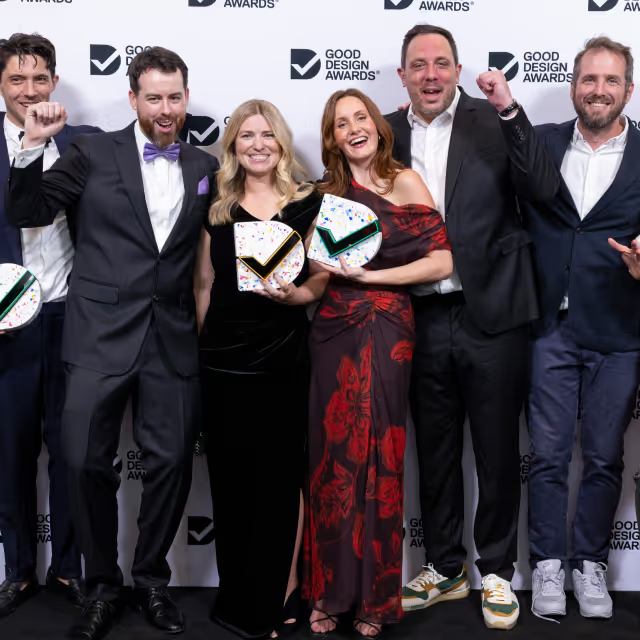
Future Friendly wins 2 Gold Good Design Awards, 3 Good Design Awards for 2025

We speak to the Starlight Foundation about the power of play even in the most challenging circumstances.

Why solving complex problems in teams is a critical skill for the future.
hello@futurefriendly.studio
partnerships@futurefriendly.studio
careers@futurefriendly.studio
We acknowledge the Traditional Owners of country throughout Australia and recognise their continuing connection to land, waters and culture.
Our studios sit on country of the Gadigal people of the Eora nation in Sydney and the Ngunnawal people in Canberra.
We pay our respects to their Elders past, present and emerging and commit to building a brighter future together.

© Future Friendly Studio Pty Ltd.
Privacy Policy