By Christopher Ellis
If you're leading a design team, on the tools every day, or somewhere in between, you've probably felt it – the quiet uncertainty about where to focus.
The promise of AI is that it will rapidly design your product's screens and create data-driven prototypes, all pulled from your design system. Not every team has unlocked this yet but the experimentation is happening.
Until now that was the designer’s job. It's how we structured our teams, organised our work and knew our place as individuals.
I am seeing teams questioning which skills still matter now? Is the thing you've spent years getting good at still the thing that's worth being good at?
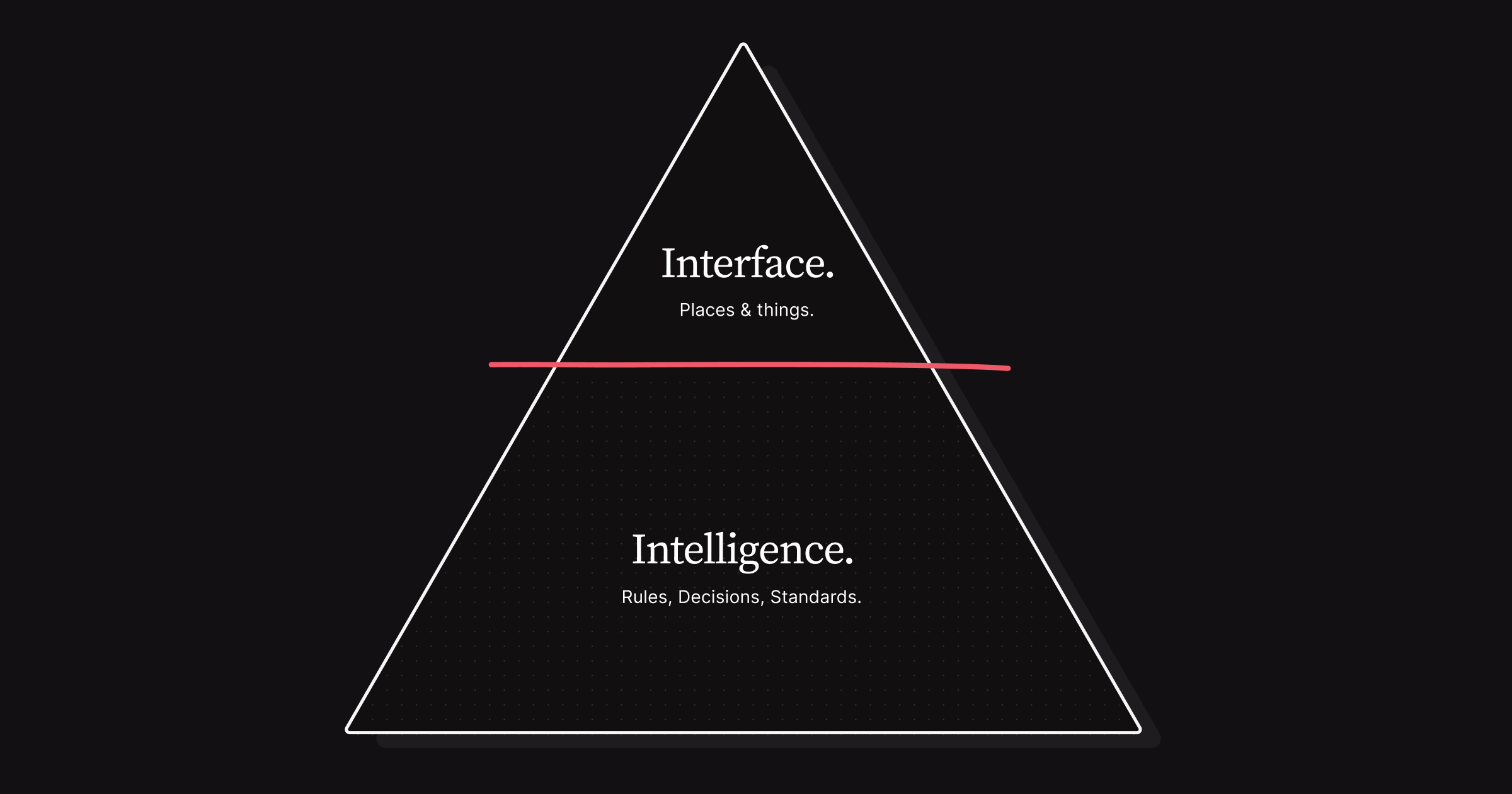
Everything else is becoming table stakes. The two things that will set you apart is crafting product intelligence, and designing a remarkable experience.
Product intelligence is the rules, the decisions, the standards. How a product evolves when you haven't designed the output.
With agentic AI experiences becoming more common, this layer doesn't just sit behind the interface anymore, it is the interface.
It's how people are interacting with your product, even if they don't see it. They feel it. Which means it gets scrutinised, challenged, and valued in a way it never was before.
With agentic experiences, products are open-ended. Users can go anywhere, ask questions in whatever order they like. You can't map that in a static file, you'd be mad to try.
Before AI, mapping every state made sense. You knew what the system would return. If it didn't, there was an error or a dead end.
A single user prompt can return complete data, nothing at all, or something malformed you never planned for. Users will combine context in ways you couldn't have predicted. No amount of extra screens solves that.
That changes what the output looks like forever.
AI has raised the floor. Foundational UX flows, anything that follows a pattern are table stakes now, and have been for a while.
The goal now is to create a remarkable experience. Something that feels like it was made with judgement and by someone.
These feel intentional, considered and moments that stop you because it’s clearly been thought about. The craft-based stuff, the weird little detail that makes something feel alive, the interaction that's slightly unexpected in exactly the right way, that doesn't come from a prompt.
It comes from someone who has spent years developing an instinct for the difference between good and remarkable and that judgement layer is something that can’t get replaced.
So what should designers be doubling down on right now? I’m getting asked this a lot.
The answer isn't a tool. It's a set of skills and mindsets that were always valuable, and are now essential.
None of these should seem new to you, they're the things that made great designers great before any of this, but they matter now more than ever.
Adaptability
Genuine comfort with change as the permanent condition, flexible about how you work and what you reach for to get there. Don’t tie yourself to one tool or way of working.
Human-centred thinking
Start everything with understanding the people you're solving for. AI doesn't change that - it’s made it more important than ever.
Experimentation
Lean into your natural curiosity. Try new tools and approaches, know what good looks like and the limitations of them.
Solving through making
The easiest way to learn something is to make it. Get ideas off post-it notes and into the hands of users to validate assumptions early.
Craft & Taste
AI has raised the floor, functional design that has a level of polish is now table stakes - but you can’t prompt yourself out of not having taste. This is the constant and relentless pursuit of the difference between good and remarkable.
Spotting significance
Identifying what actually matters in a sea of information. Knowing which signal to follow and what is just noise.
Conviction and clarity
Knowing where to place bets and being able to communicate that choice clearly and trade offs to your team and across the organisation.
This is the biggest shift I've seen from designing every outcome, to designing the rules that generate them.
Visual style
Not designing every screen but setting the rules that make every screen feel considered and consistent, however it gets generated.
System behaviour
Defining how a product behaves, adapts, and evolves based on who's using it. Not one experience or golden path, the logic that produces the right experience every time.
Tone of voice
Writing the rules that govern how a system communicates across every interaction. Including the ones nobody planned for.
Guardrails and escalation
Defining what the system will and won't do, and what happens when it hits those boundaries. Ensuring there is a way to catch anything harmful, escalate it before it reaches a person.
The interface was always just the visible tip of a much bigger job.
AI didn’t change the job. It just removed the part that was easiest to see, and left the part that was always hardest.
The judgment. The taste. The ability to know what’s worth building in the first place.
Designers who get that are going to be fine. More than fine. The work just got more interesting.
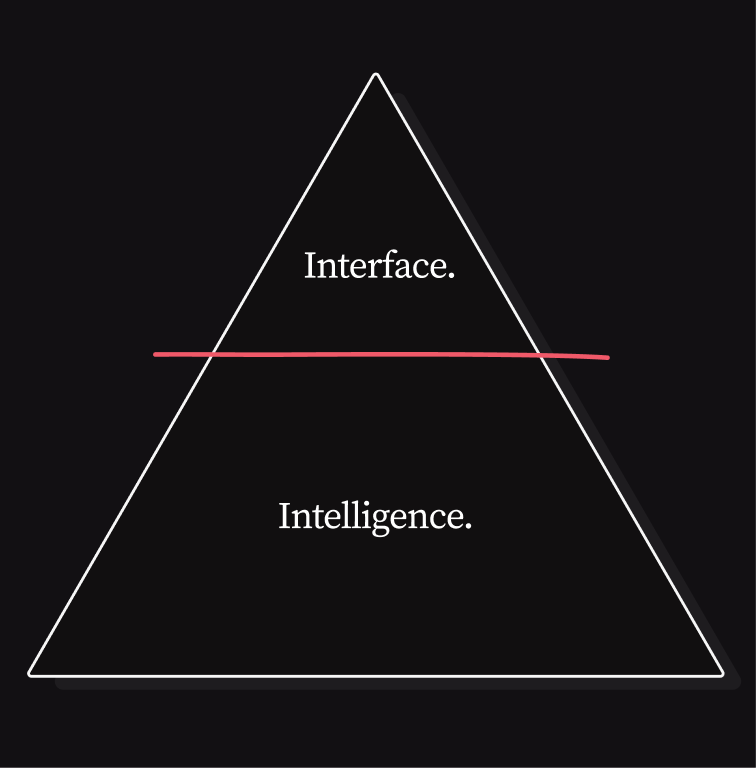
What's shifting in product design, what stays true, and where teams should focus next
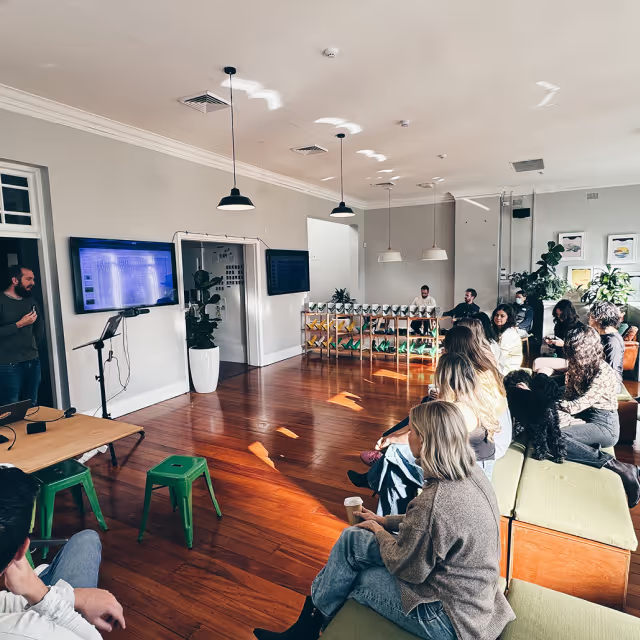
In consultation with EY, we made the strategic decision to transition Future Friendly back to an independent agency
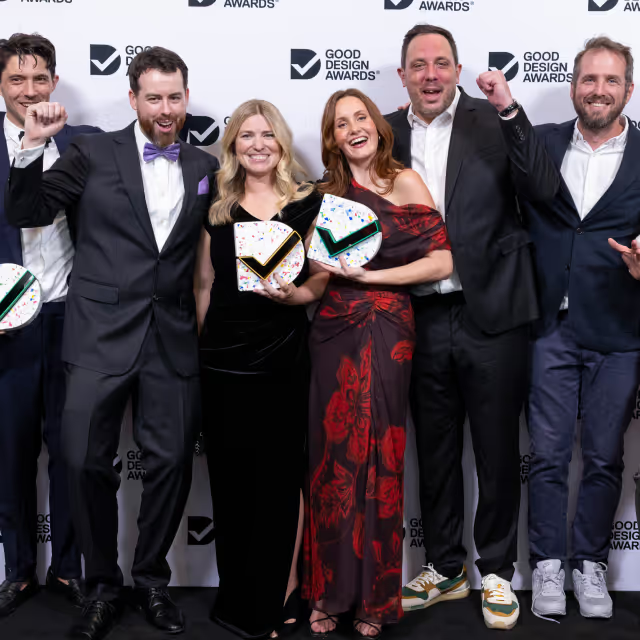
Future Friendly wins 2 Gold Good Design Awards, 3 Good Design Awards for 2025

We speak to the Starlight Foundation about the power of play even in the most challenging circumstances.

Why solving complex problems in teams is a critical skill for the future.
hello@futurefriendly.studio
partnerships@futurefriendly.studio
careers@futurefriendly.studio
We acknowledge the Traditional Owners of country throughout Australia and recognise their continuing connection to land, waters and culture.
Our studios sit on country of the Gadigal people of the Eora nation in Sydney and the Ngunnawal people in Canberra.
We pay our respects to their Elders past, present and emerging and commit to building a brighter future together.

© Future Friendly Studio Pty Ltd.
Privacy Policy